Key takeaways
- Doors and windows that start sticking are often the earliest sign.
- Stair-step cracks in brick and diagonal cracks at door corners point to movement.
- Gaps where trim meets walls or ceilings mean something shifted.
- Several signs showing up around the same time matter more than any single one.
The back door stuck one August afternoon, and by October it wouldn’t latch without a shoulder. That’s a common way for foundation trouble to announce itself in Amarillo, where a long dry summer can shrink the soil under one side of a house more than the other.
Sometimes it’s nothing. Doors stick for plenty of reasons. But it’s worth knowing what else to look for, so you can tell a loose hinge from a house that’s shifting.
Inside the house
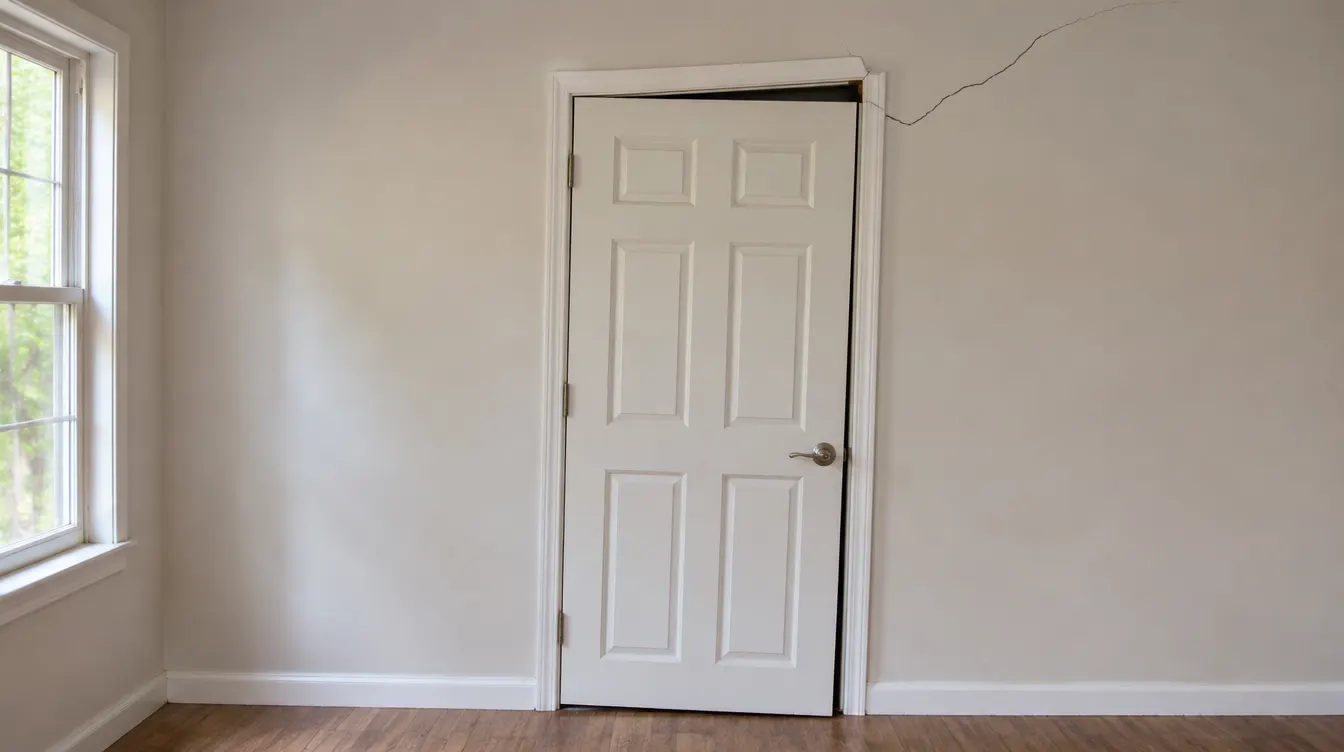
Start with doors and windows. Notice any that suddenly stick, swing open or shut on their own, or won’t latch. Look at the gap between door and frame. If it’s wider at the top on one side and tight on the other, the frame has racked.
Then look at the walls. Cracks that run diagonally up from the corners of doors and windows are a classic sign. So are cracks along drywall seams that open, get taped, and open again.
Check where trim meets the wall, ceiling or floor. A baseboard pulling away from the floor, or crown molding with a growing gap, means part of the house moved relative to the rest.
Floors come last because they’re the hardest to see. Set a marble or a small ball on a hard floor. If it rolls steadily one way, or you notice yourself walking slightly downhill down a hallway, the floor isn’t level. Cracked floor tile along a straight line is another clue.
Outside the house
Brick tells you a lot. Look for cracks that zigzag up through the mortar like stairs, especially near corners, windows and the garage. Look for a crack where brick meets the window frame, or brick that’s pushed out past the line of the wall.
Look at the slab edge where it’s visible. Cracks running through it, a corner that’s broken off, or soil that has pulled back and left a gap all deserve a note.
Look up, too. A chimney leaning away from the house, or a gap opening between the chimney and the siding, is a structural sign.
Raised homes
On a pier and beam house, add soft or springy spots in the floor, one room noticeably lower than the next, and floors that dip along an outside wall. A crawl space look usually shows a sunken pier, a slipped shim or rotted wood.
So which signs mean call now?
Any one of these by itself can be minor. The pattern is what matters. Doors sticking plus diagonal wall cracks plus a gap at the baseboard, all in the same corner of the house, tells a different story than a single hairline crack in the garage floor. A crack you marked in pencil that has grown past the mark is also worth a call.
When you call, write down what you noticed and roughly when it started. It helps the inspector more than you’d think. A foundation inspection with elevation readings will tell you whether the house has moved and how much.
Frequently asked questions
Is a sticking door always a foundation problem?
No. Humidity, loose hinges and worn hardware cause it too. When several doors start sticking around the same time, or a door that's been fine for years suddenly isn't, movement is more likely.
How fast do foundation problems get worse?
It varies. Some houses shift a little and stop. Others keep moving with each wet and dry season. Tracking cracks with dated pencil marks is the simplest way to know.
Can I just watch it for a while?
For a single thin crack, watching it is reasonable. If cracks are growing, floors are sloping or several signs appear together, get an inspection rather than waiting.
My house is pier and beam. Are the signs different?
Raised houses show many of the same signs, plus soft or bouncy spots in the floor and floors that dip near one wall. A look in the crawl space usually explains it.