Key takeaways
- Uneven moisture under a slab is what moves it, more than wet or dry alone.
- Some Panhandle soils contain clay that swells when wet and shrinks when dry.
- Long dry spells pull moisture from the edges first; sudden storms can soak one side.
- Steady watering a short distance from the slab and good drainage help keep the soil even.
Ask anyone who has lived in Amarillo a while and they’ll tell you about the weather swings. Weeks without rain, then a storm that drops more water in an afternoon than the yard can take. Wind that never really quits. Winters with real freezes. Your house sits on top of all that, and so does the soil it rests on.
The soil under the slab
Soil across the Panhandle varies a lot, even block to block. Some of it contains clay that expands when it absorbs water and contracts when it dries. Caliche, a hard layer common in the region, shows up in some lots and not others. You won’t know what’s under your house without someone digging, which is one reason foundation companies take soil into account when they plan pier depth.
Clay content matters most. When clay swells, it pushes up. When it dries and shrinks, it pulls away and the slab above loses support. If that happened evenly under the whole house, the slab would rise and fall in one piece and nobody would notice much. It doesn’t happen evenly.
Dry spells, then storms
During a long dry stretch, the soil at the edges of a slab dries first. The ground near the middle, shaded by the house, holds moisture longer. The edges drop slightly and the center stays put, and brick and drywall crack to make up the difference.
Then a big storm comes through. Water rushes off the roof and pours out of a downspout onto one corner. That corner soaks up water and swells while the other side of the house, maybe sheltered from the wind-driven rain, stays dry. The slab gets pushed unevenly again, in a different direction.
Foundations take the most stress when moisture changes fast and hits one side of the house harder than the other.
Wind and freeze
Wind speeds up drying. Steady wind across bare soil pulls moisture out faster than still air would, so a windy dry spell does more to the ground around a house than the temperature alone suggests.
Winter brings a different stress. Water that gets into an existing crack in a slab or in mortar can freeze, expand and widen it, and the cycle repeats every time the temperature crosses freezing. That’s one reason to seal cracks before winter and to keep water from collecting against the house.
Watering around a slab
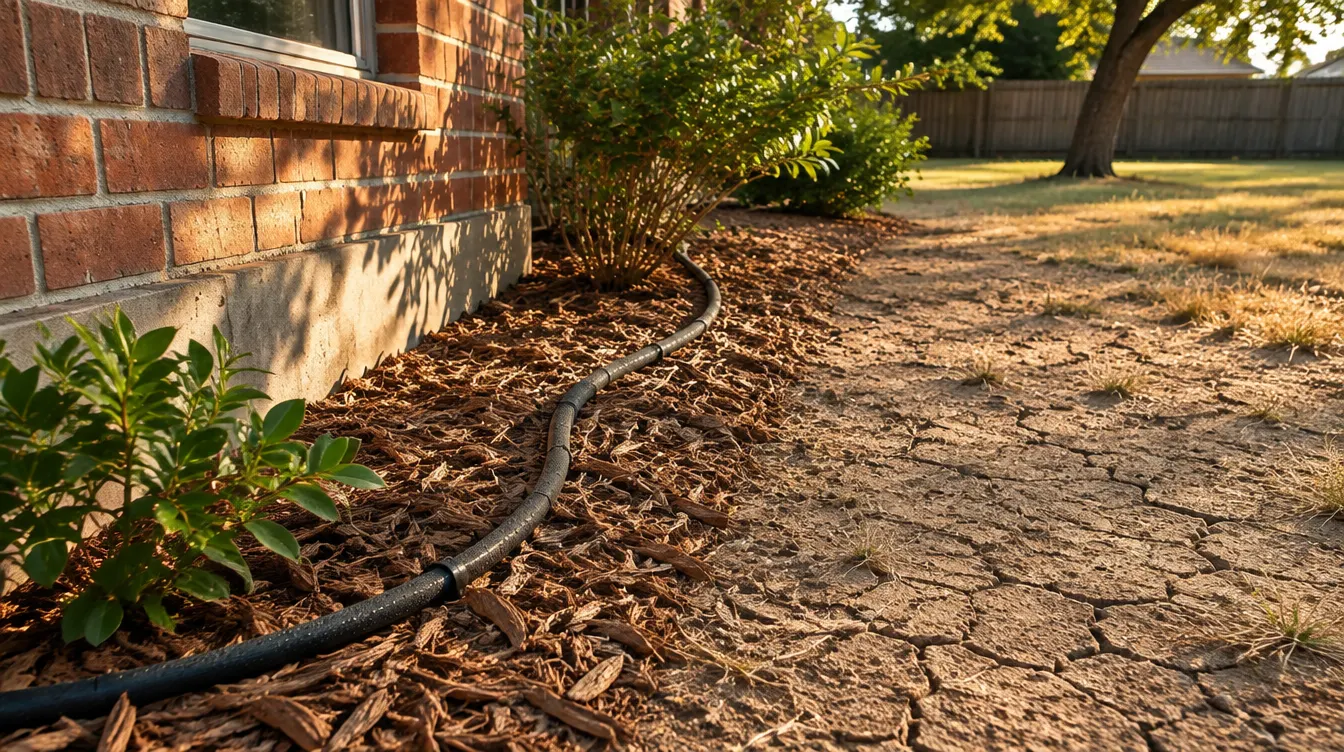
Many foundation companies in dry regions recommend keeping the soil around a slab from drying out completely in long dry spells. A soaker hose laid in the soil a short distance from the foundation, not against it, and run on a regular schedule is the usual suggestion. The idea is to keep moisture steady, so there’s no point soaking the ground once a week and letting it bake in between.
A few cautions:
- Don’t flood the soil against the slab. That causes the swelling you’re trying to avoid.
- Watch for water that runs toward the house instead of soaking in.
- If you have a sprinkler system, check that heads near the house aren’t spraying the brick or pooling at the slab.
- Ask a local foundation company what they recommend for your specific house, since soil varies so much.
Drainage around a slab
The other half of the job is getting storm water away from the house:
- Keep gutters clean and add downspout extensions so roof water lands several feet out.
- Make sure soil and flower beds slope away from the house on every side.
- Watch the yard during a heavy rain and note where water pools.
- Fix leaky hose bibs and outdoor faucets. A slow drip against the slab is a small daily soaking.
When those steps aren’t enough, regrading or a French drain may be. See drainage correction for how that work is done, or request a free quote if you’d like a local company to look at how your lot handles water.
What we can’t tell you from here is how much clay is under your particular house, or whether a caliche layer sits two feet down or ten. That takes someone with a shovel or a probe on your lot.
Frequently asked questions
Should I water my foundation?
In long dry spells, many foundation companies suggest keeping the soil around a slab from drying out, using a soaker hose set a short distance out from the foundation rather than right against it. Ask a local company for advice specific to your house and soil.
Can I water too much?
Yes. Soaking the soil against the slab can cause swelling and push water where you don't want it. The aim is soil that stays about the same, not soil that's wet.
Do trees near the house cause foundation problems?
Large trees pull a lot of water from the soil and can dry out the ground under one side of a house. Ask an arborist and a foundation company before planting big trees close to the house or removing one that's already there.
Does freezing weather affect foundations here?
Amarillo gets hard freezes in winter. Repeated freezing and thawing can widen existing cracks in concrete and brick and affect shallow footings, so sealing cracks and keeping water away from the slab both help.